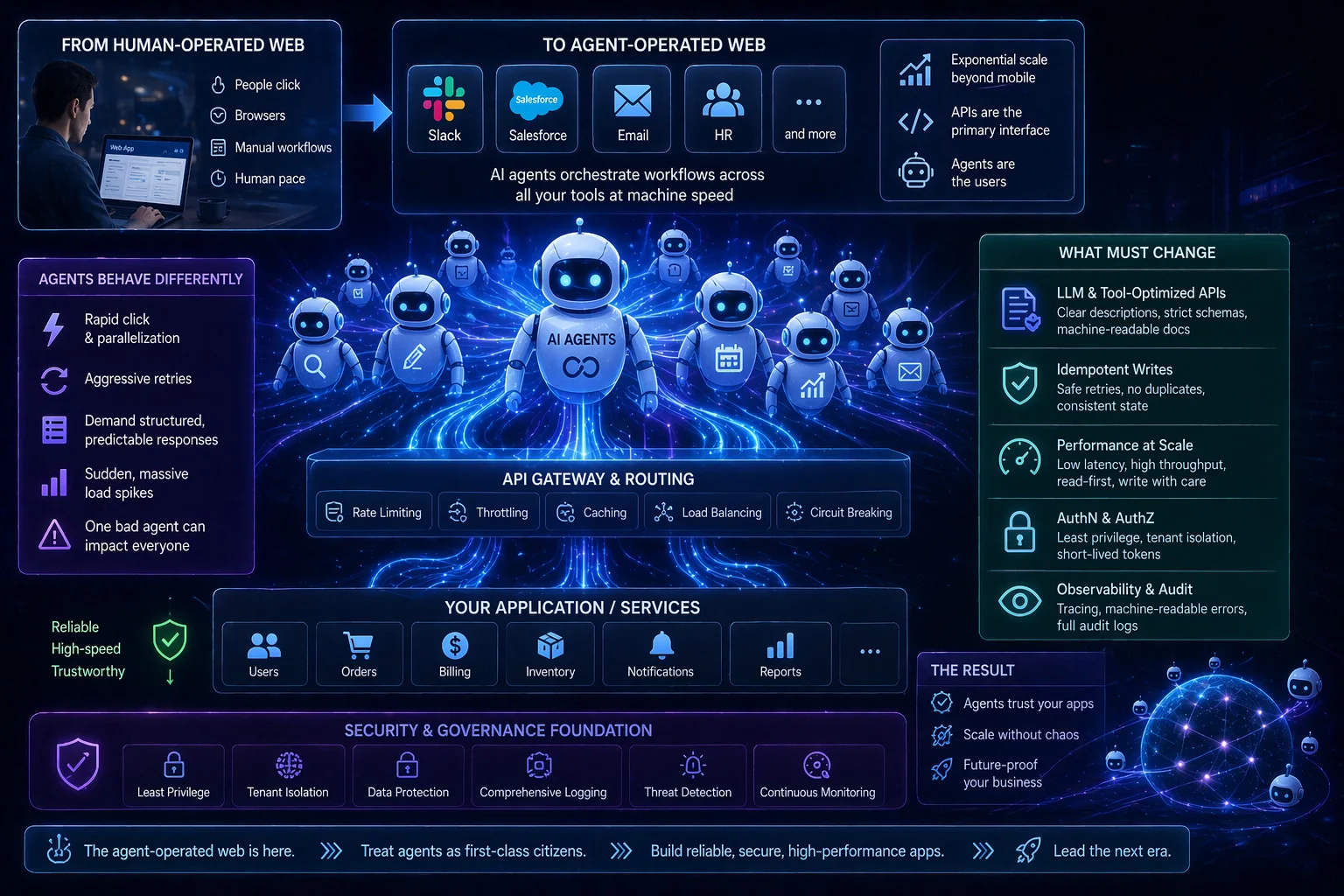
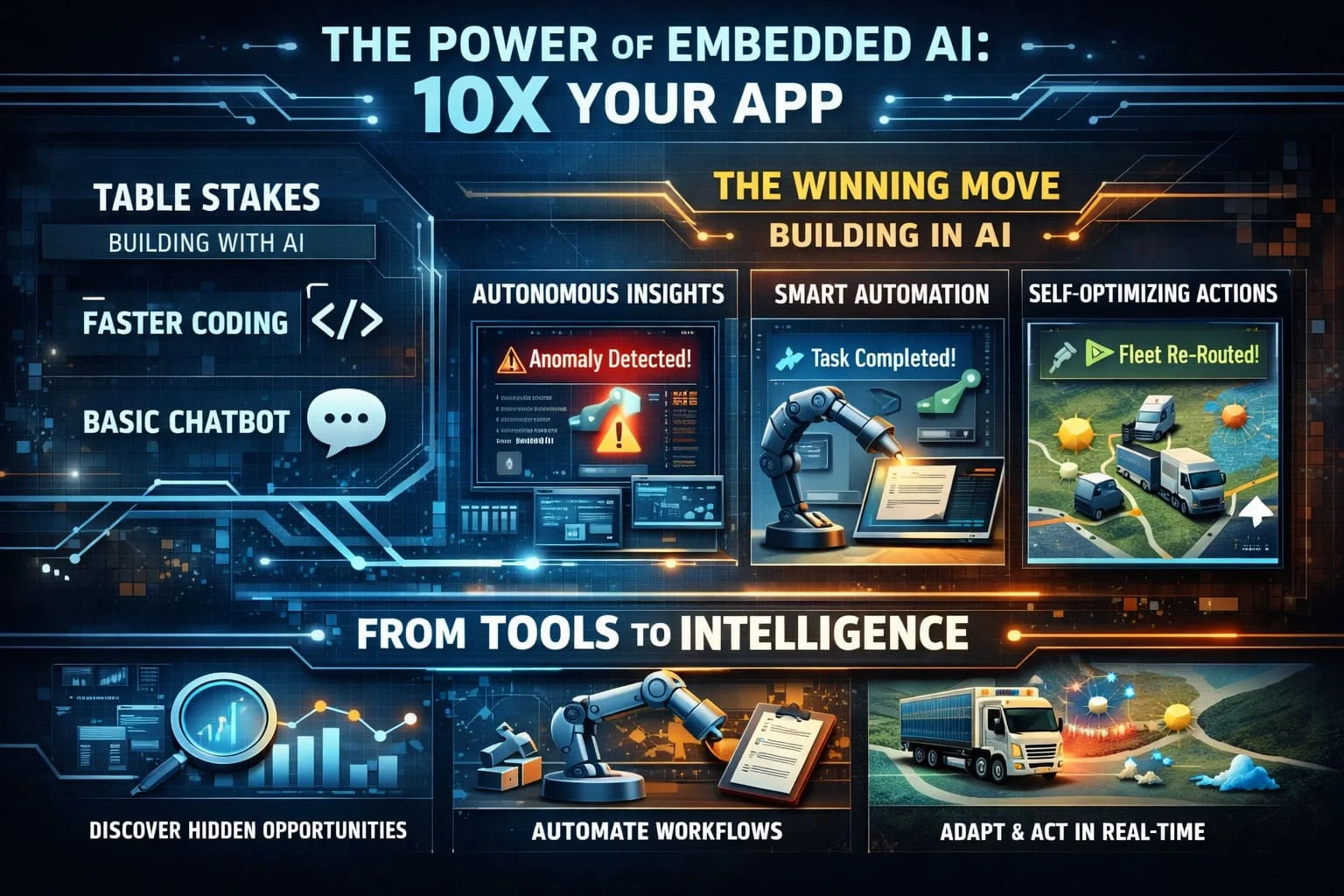
Software development has come a long way from its traditional roots. It used to be a mostly solitary activity where you sat down, wrote code line by line, and maybe grabbed a snippet or two from Stack Overflow when you got stuck. Today, that single-mode approach is giving way to something far more dynamic and powerful: a multimodal way of building software. Developers are no longer just writing everything themselves. Instead, they combine pre-built components (API integrations and ready-made functions), AI prompts and some glue code to create applications faster than ever.
Software development has gone multimodal. This evolution is not about replacing human ingenuity. It is about amplifying it. And at the center of it all is a new role for the software developer: the orchestrator.
In the old world, reuse meant copying a function from a forum or pulling in an open-source library. That was helpful, but it still required a human to find the right piece, adapt it, and stitch it into the larger codebase.
Now we are moving further down that path, but with a crucial difference: the heavy lifting does not always need to be done by a person. Large language models (LLMs) and AI agents can handle much of the work when given the right context. Think of it as supplying the AI with a clear contract: here are the requirements, here are the edge cases, here are the APIs you can call, and here is what success looks like. You provide prompts and constraints, the agent executes against them, and then you review the output.
This multimodal style mixes several techniques at once:
The result is software built not just from scratch, but from an intelligent assembly of existing capabilities.
Not every task needs the same level of human involvement. This is where the spectrum of autonomy comes in.
At one end, you maintain total control: you write the prompt, check every line, and approve every change. In the middle, you give an agent a well-defined job with guardrails and review the results before merging. At the far end, you hand over a high-level goal and let the model operate more autonomously, stepping in only when it hits a roadblock.
Most real-world work lives in the blended zone. You decide which parts benefit from full oversight and which can safely run on autopilot. The beauty of this spectrum is its flexibility. You match the right level of autonomy to the complexity and risk of each piece of the project.
None of this means the software developer’s job is disappearing. If anything, it is becoming more important and more interesting.
Instead of being the person who writes every note, you become the conductor of an orchestra. You decide which instruments (components, tools, agents, APIs) should play at which moment. You direct the tempo, cue the different sections, and make sure everything harmonizes into a coherent whole.
This role demands greater sophistication. You need to understand not only code but also system architecture, business requirements, integration patterns, and the strengths and weaknesses of the AI tools at your disposal. It blends product management, domain expertise, software development, and QA. Yet the payoff is enormous: dramatically faster delivery, lower costs, and richer capabilities than a lone developer could ever achieve manually.
Here is where things get really exciting from a business perspective. An LLM subscription might cost around $200 a month, yet it can deliver the output of several full-time developers. That is a powerful arbitrage between human labor and AI automation.
Lower costs and higher velocity mean teams can ship more software, iterate faster, and tackle ambitious projects that once seemed out of reach. And this is where Jevons paradox kicks in. Just as more efficient steam engines led to greater overall coal consumption, more efficient software development will not reduce the total amount of software being built. It will increase it.
We will see a surge in demand for sophisticated “conductor” talent: people who can orchestrate these multimodal systems to create cheaper, faster, and more feature-rich applications. The market will reward those who master the blend of human judgment and AI capability.
Of course, LLMs are not perfect. They have low moments, hallucinations, and gaps in reasoning. The beauty of the orchestrated approach is that these weaknesses become manageable. One agent’s output can be reviewed or assembled by another. Human product managers, clear schedules, and thoughtful scaffolding keep everything on track. And the entire process drives us back toward smarter reuse: building and maintaining high-quality, modular components that future projects can plug in effortlessly.
In short, the flaws do not halt progress. They push us toward even better systems of assembly, verification, and reuse.
We are in the middle of a genuine transformation. Software development is evolving from a craft of individual writing to a symphony of coordinated intelligence. The humans who embrace this shift, who learn to conduct the orchestra rather than play every instrument themselves, will be the ones shaping the next generation of technology.
The tools are ready. The economics make sense. The only question left is how creatively we choose to lead.
If you are a developer, now is the perfect moment to start experimenting with agents, prompts, and integrations. The future belongs to the conductors. Grab the baton.


Subscribe to our newsletter to receive the latest updates and promotions from MPH straight to your inbox.