We have seen this movie before. A decade ago, teams scrambled to go mobile-first because smartphones suddenly represented the majority of web traffic. Today, a bigger shift is underway. We are moving from a human-operated web to an agent-operated web, and the numbers will dwarf what mobile ever achieved. Autonomous AI agents are already orchestrating workflows across Slack, Salesforce, email inboxes, HR, and dozens of other tools. That traffic is only going to grow, and it will do so in ways we cannot fully predict yet.
Marc Benioff made this crystal clear in recent weeks. Salesforce is re-architecting its entire portfolio, Slack included, around agents. He described Slackbot as the “front door to the Agentic Enterprise,” with APIs becoming the primary interface and agents acting as the users. No browser required. The message is unmistakable: the tools that power modern business are being rebuilt so agents can read, write, and coordinate at machine speed. If industry giants are betting this hard on the shift, the rest of us cannot afford to treat it as science fiction.
Agents do not behave like human users or even like traditional microservices. They issue rapid sequences of calls, sometimes in parallel. They retry aggressively when anything looks off. They expect perfectly structured, predictable responses and can generate sudden, massive load spikes. One misbehaving agent can feel like a denial-of-service attack, yet it is simply doing its job.
That difference forces real architectural choices. If your app was designed only for humans clicking buttons or for clean REST calls from other services, it will feel brittle and slow to agents. The goal is to make your application feel like a reliable, high-speed tool that agents can trust, while still protecting data integrity and overall system performance. Treat agents as first-class citizens from day one, and your app becomes future-proof. Ignore them, and you will spend the next few years retrofitting under pressure…or become roadkill.
Start with the core design philosophy. Every endpoint and capability must be optimized for LLM and tool-calling consumption. That means clear, natural-language descriptions, strict schemas, and machine-readable documentation that agents can parse instantly. Human-facing apps can get away with vague labels or “see the docs” hand-waves. Agents cannot; they need precision so they call the right thing the first time and understand exactly what they will receive back.
Writes need to be idempotent by default; that’s just a fancy word for saying it handles multiple failures and retries gracefully. Agents retry, sometimes multiple times in quick succession. Without built-in safeguards, you risk duplicate records, double charges, or inconsistent state. The why is simple: reliability at scale. Idempotency turns potential chaos into safe, repeatable operations.
Performance becomes non-negotiable. Agents thrive on low latency and high throughput. Reads must feel instantaneous; writes must be fast enough that the agent does not stall its entire workflow. Many early agent systems begin with read-only access and layer in writes only after trust is established, often with human approval queues for sensitive actions. This phased approach protects the business while letting agents prove their value quickly.
Authentication and authorization must be finer-grained than ever. Agents operate on behalf of users or teams, but they should never receive blanket “admin” rights. Least-privilege scoping, tenant isolation, and short-lived session tokens become table stakes. The reason is obvious: one compromised or overly permissive agent could expose far more data than a single human user ever could.
Observability also shifts. Every agent request needs rich tracing, consistent error formats that machines can parse, and full audit logs tied to the agent’s identity and intent. When something goes wrong, you need to debug not just what failed, but why the agent decided to call that tool in the first place. Without this visibility, diagnosing agent-driven issues turns into guesswork.
Securing an agent-first architecture carries a special irony. The same powerful AI models that agents rely on can also be used by adversaries to probe your system more creatively than any human pentester. Model-assisted attacks might craft novel prompt injections, chain together edge-case tool calls, or discover unexpected data leaks at speeds no manual red team could match. High-level protections, strong isolation, comprehensive logging, and continuous monitoring become essential, not optional. The architecture must assume agents, both friendly and malicious, will test every boundary.
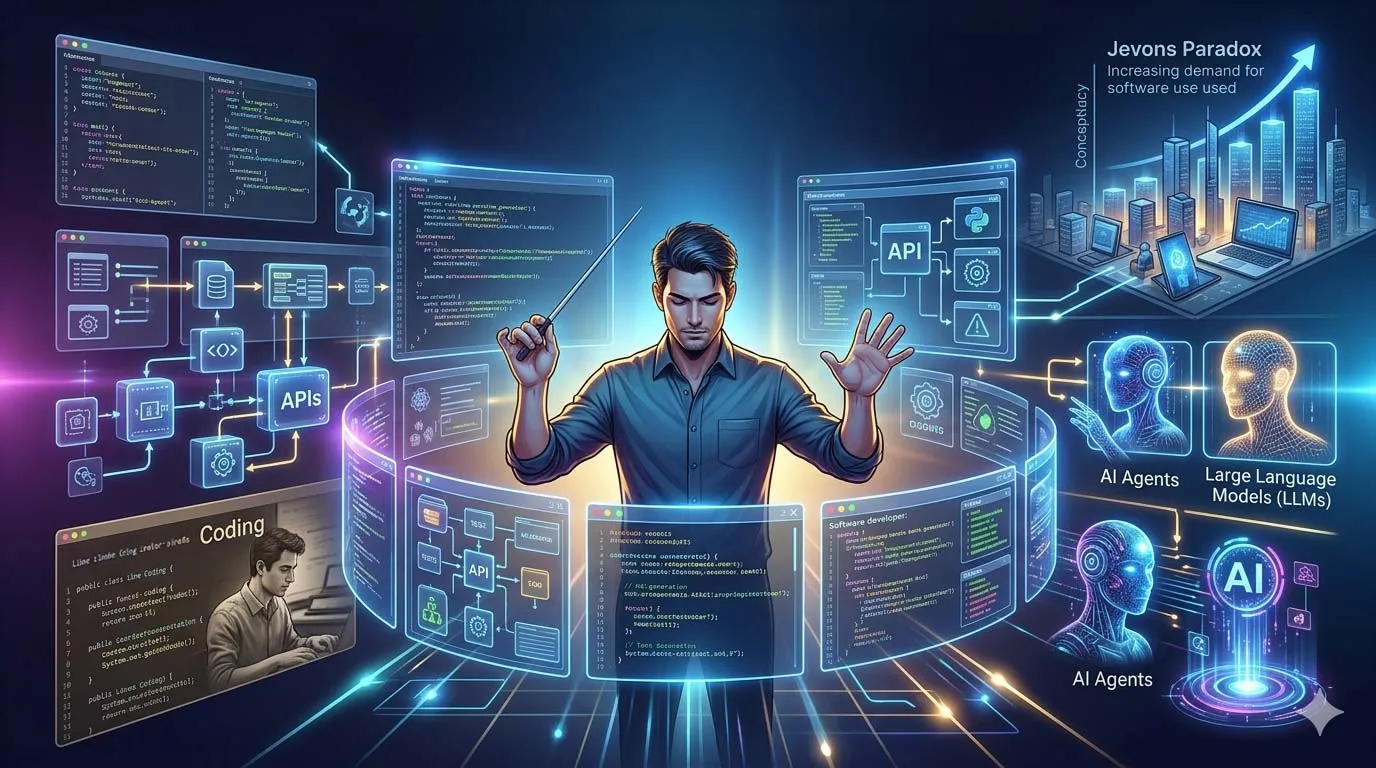
This transition will create a lot of work, both for retrofitting existing applications and for building brand-new agent-native ones. Every major app will eventually need to expose clean, agent-optimized surfaces. That sounds like efficiency gains, and it is, but Jevons Paradox applies here in the medium term. As agents slash the time and headcount required per project, the total volume of software we build explodes. Demand for developers, architects, and AI-integration specialists will rise, not fall. We will simply accomplish far more with the talent we have.
The agent-operated web is not coming; it is already arriving. Salesforce’s public pivot shows that even the largest enterprise platforms are racing to adapt. New agent-first applications will capture mindshare quickly, but the real opportunity belongs to teams that make their existing apps agent-ready today. The architectural changes are not cosmetic. They are foundational shifts in philosophy, performance expectations, reliability guarantees, and security posture. Make agents first-class citizens, and your application will thrive in the next era of the web. Treat them as an afterthought, and you risk watching your competitors pull ahead while you scramble to catch up. The choice is yours, but the clock is ticking.


Subscribe to our newsletter to receive the latest updates and promotions from MPH straight to your inbox.